At 3:00 a.m. GMT on Friday, November 28, 2025, the world’s largest derivatives market went dark. CME Group, the Chicago-based exchange operator that handles roughly 30 million futures and options contracts daily, abruptly halted all trading across its CME Globex platform — a move that froze global markets from Wall Street to Tokyo. The cause? A cooling system failure at a CyrusOne data center in Illinois. Not a cyberattack. Not a power grid collapse. Just a broken air conditioner. And for a financial system built on milliseconds, that was enough.
When the Servers Overheated
The last trades on major U.S. futures — S&P 500, Nasdaq, Treasury bonds, crude oil, and forex — were recorded at 9:44 p.m. Eastern Time on Thursday, November 27. By 3 a.m. Friday, CME Group’s official X account confirmed the halt: "Due to a cooling issue at CyrusOne data centers, our markets are currently halted. Support is working to resolve the issue in the near term." What followed was a 10-hour blackout. Markets didn’t just pause — they froze. No new orders. No price discovery. No hedging. For institutional traders managing billions in risk, it was a nightmare. The outage hit during the Thanksgiving holiday weekend, when trading volumes are already thin. That made the aftermath even more volatile. Analysts at Benzinga warned that when markets reopened, even small orders could trigger wild swings — and they were right.The Hidden Weak Link
Here’s the twist: CME Group doesn’t own the data center where this happened. In 2016, it sold the facility to CyrusOne, a Dallas-headquartered data center operator with 55+ locations worldwide. Then it leased it back. A common move in real estate — but in finance, it created a terrifying single point of failure. The cooling system malfunctioned because of a cascading HVAC failure. Temperature sensors likely spiked beyond 90°F. Server racks began throttling. Emergency shutdowns kicked in. It wasn’t a software glitch. It wasn’t a hacker. It was a literal, physical breakdown — the kind you’d expect in an old office building, not the nerve center of global finance. "We’ve spent billions on encryption, AI-driven fraud detection, and quantum-resistant protocols," said one former CME infrastructure engineer, speaking anonymously. "But the thing that brings us down? A pump that stopped circulating coolant. It’s like having a fighter jet with a titanium airframe but a rubber fuel line."Who Pays the Price?
The fallout wasn’t just technical. It was financial. Hedge funds couldn’t adjust positions. Commodity producers couldn’t lock in prices for next season’s crop. Banks couldn’t hedge currency exposure. Even the BrokerTec EU and BrokerTec US Actives platforms — which handle $1.2 trillion in daily bond trades — were offline. CME Group’s balance sheet looks strong on paper: a debt-to-equity ratio of 0.12, low leverage, and a beta of 0.08 — meaning its stock barely moves with the market. But its Altman Z-Score of 0.57? That’s in the "distress" zone. Investors are betting on its dominance, not its resilience. "This isn’t about CME’s finances," said Dr. Elena Ruiz, a financial infrastructure analyst at MIT. "It’s about how we’ve outsourced critical infrastructure to third parties without redundancy. If a single cooling unit can shut down 90% of global derivatives trading, we’re not building systems — we’re building dominoes."
What Happened After the Lights Came Back On
Trading resumed at 7:30 a.m. Chicago time on Friday, November 28. By 8:20 a.m. ET, CME confirmed all platforms — including futures, options, and bond markets — were open. But the damage was done. The S&P 500 futures opened 1.8% lower than their pre-halt level. Oil prices jumped 3% on panic buying. The VIX, Wall Street’s "fear gauge," spiked 22% in the first hour of trading. CyrusOne has remained silent. No press release. No explanation. The root cause — whether it was a failed chiller, a refrigerant leak, or a control system bug — remains undisclosed. That silence is as concerning as the outage itself.The Bigger Picture: Centralization Is the Real Risk
This isn’t the first time a data center failure has rattled markets. In 2021, a fire at a Equinix facility in Amsterdam disrupted European trading. In 2023, a cooling failure at a Google Cloud region in Belgium took down fintech apps for hours. But those were regional. This was global. The pattern is clear: financial markets are increasingly reliant on a handful of third-party data centers. And those centers? They’re optimized for cost, not catastrophe. Cooling systems are often the last thing upgraded — and the first thing to fail. "We treat financial infrastructure like a utility," said former SEC advisor Michael Tran. "But utilities have backups. Redundant grids. Multiple power sources. We don’t. We’ve built a house of cards — and we’re surprised when the wind blows."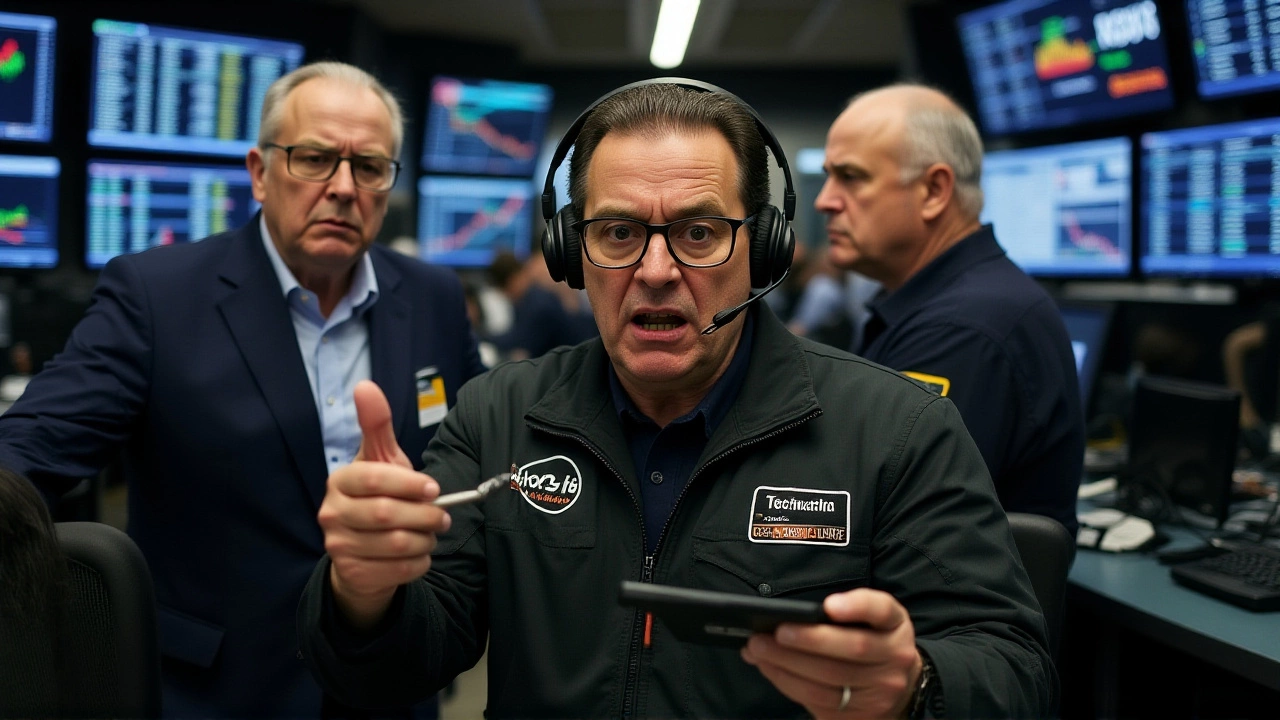
What’s Next?
CME Group says it’s reviewing its infrastructure strategy. But with no public details on how it will reduce reliance on CyrusOne, investors are left guessing. Regulatory pressure is mounting. The CFTC and SEC are expected to hold emergency hearings next week. One thing’s certain: the era of trusting single-point infrastructure is over. The question is whether the system will adapt — or wait for the next cooling failure to bring it down again.Frequently Asked Questions
How did the cooling failure affect everyday investors?
Even retail investors felt the ripple. ETFs tracking S&P 500 or Nasdaq futures couldn’t be priced accurately during the outage, causing delays in trades. Mutual funds that hedge against market swings were left exposed. When markets reopened, sharp price jumps meant some investors got filled at unexpected prices — sometimes 2% worse than expected. The lack of price discovery for 10 hours created uncertainty that lingered all day.
Why didn’t CME have a backup data center?
CME does operate secondary data centers — but they’re designed for cybersecurity or network failures, not physical infrastructure collapse. The Illinois facility was the primary hub for real-time trading. Redundant systems require massive capital and are often deemed unnecessary until something breaks. After this event, regulators are likely to mandate geographic and physical redundancy — but that could take years to implement.
What’s the financial impact on CME Group?
CME Group didn’t lose revenue directly — it doesn’t charge for downtime. But its reputation took a hit. Clients may demand lower fees or penalties in future contracts. Analysts warn that institutional clients could begin shifting volume to competitors like Intercontinental Exchange (ICE) or Eurex, especially if CME fails to prove its infrastructure is now resilient. Stock price volatility spiked 40% in the 24 hours after the outage.
Is this similar to the 2013 Knight Capital glitch?
Yes, in impact — not cause. Knight Capital’s 2013 crash was a software bug that dumped $460 million in 45 minutes. This was a hardware failure. But both exposed how fragile modern markets are. Knight’s glitch happened during market hours. This one happened during a holiday weekend, when fewer traders were monitoring positions — making the recovery harder and the volatility worse.
What’s CyrusOne’s role in this?
CyrusOne owns and operates the facility, but under a leaseback agreement, CME Group is its primary tenant. While CyrusOne handles maintenance, CME relies on it for uptime. Neither has publicly acknowledged fault. But industry insiders say CyrusOne’s contract likely limits liability for downtime — meaning CME bears the financial and reputational risk. That’s the real flaw: outsourcing critical infrastructure without shared accountability.
Could this happen again?
Absolutely. There are at least six other major financial data centers in the U.S. and Europe that rely on similar single-point cooling systems. Climate change is making heatwaves more frequent — and data centers generate more heat than ever. Without mandatory redundancy standards, another outage isn’t a question of if — it’s a question of when.